Learning grammar doesn’t have to feel boring or overwhelming. For many kids, worksheets and drills can feel repetitive, but fun grammar games turn language learning into an exciting adventure. Whether you’re a parent supporting your child at home or a teacher looking for creative classroom activities, these games make grammar practice enjoyable and effective.
Why Use Grammar Games?

Games make grammar interactive. Instead of passively memorizing rules, kids actively apply them in play. This keeps their attention, boosts motivation, and helps them remember grammar concepts longer. Plus, when children laugh and have fun while learning, they’re more likely to develop a positive attitude toward English.
7 Fun Grammar Games for Kids
1. Grammar Bingo
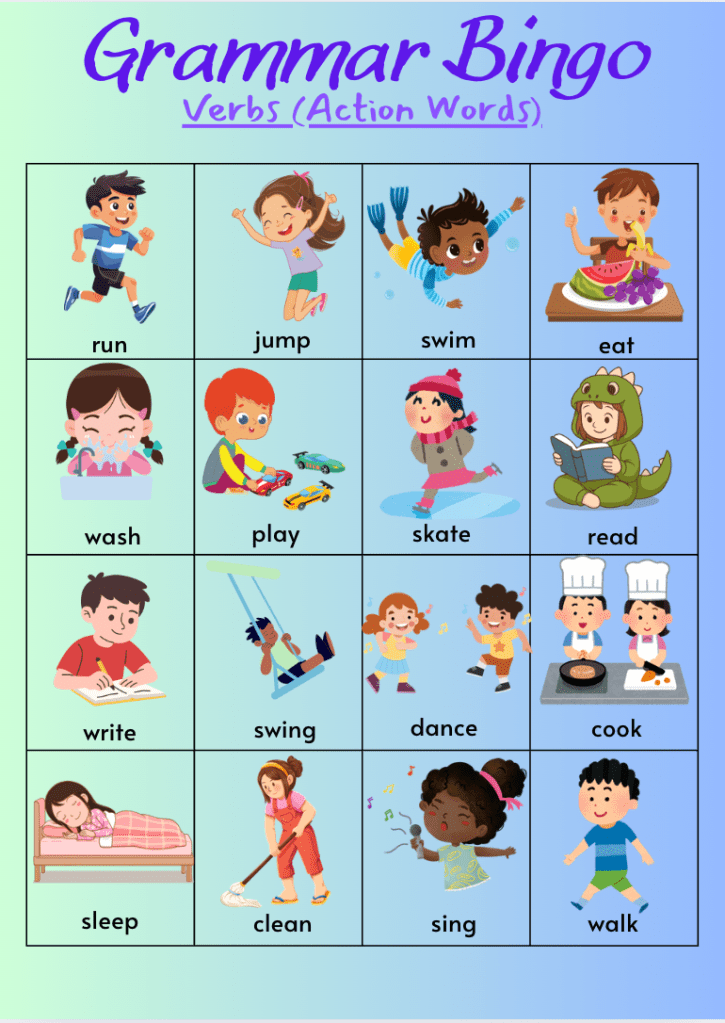
Create bingo cards with grammar prompts such as nouns, verbs, adjectives, or past tense words. Call out examples, and kids mark the correct squares. This builds quick recognition of different parts of speech.
Example: Say “run.” Kids check if they have the word “verb” on their card.
2. Sentence Scramble
Write words from a sentence on separate cards and shuffle them. Kids must arrange them into a grammatically correct sentence. This strengthens sentence structure skills.
Tip: Start with simple sentences, then add more complex ones with conjunctions and adjectives.
3. Verb Charades
Kids act out verbs while others guess the word and say it in a sentence. This helps reinforce action verbs and proper usage.
4. Punctuation Relay
Write sentences without punctuation on slips of paper. Kids race to add the correct punctuation marks. This game makes punctuation practice fun and fast-paced.
5. Grammar Jeopardy
Create categories like “Past Tense Verbs,” “Adjectives,” or “Fix the Sentence.” Kids choose questions, earn points, and practice grammar through friendly competition.
6. Parts of Speech Scavenger Hunt
Hide words around the room. Assign each child a part of speech (noun, verb, adjective). They collect words that fit and then use them to build funny sentences together.
7. Board Game Twist
Take a simple board game like Snakes and Ladders. Each time a child lands on a square, ask them a grammar question. Correct answers let them move forward—making learning part of playtime.
Tips for Parents and Teachers
- Keep games short and fun (10–15 minutes).
- Adjust difficulty based on age and skill level.
- Celebrate effort as much as correct answers.
- Encourage kids to create their own grammar games for extra engagement.
Final Thoughts
When learning feels like play, kids are more eager to participate. By using these fun grammar games for kids, you can transform grammar from a challenge into a favourite activity. Whether at home or in the classroom, these engaging activities build strong English foundations while keeping children motivated and smiling.
 Learners English Academy